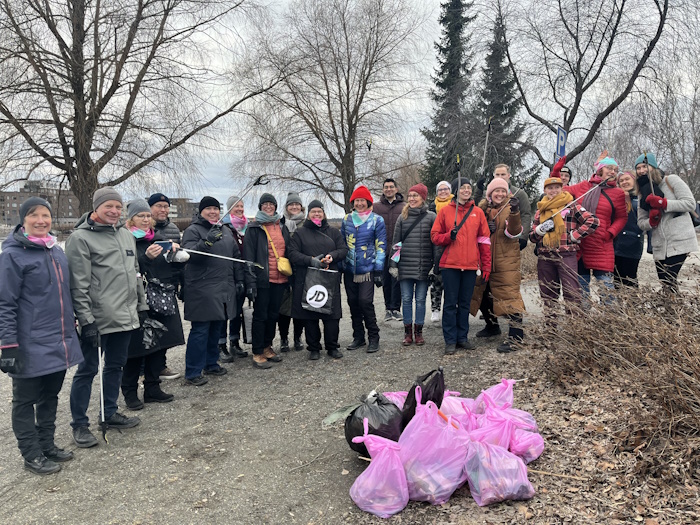
It goes without saying that plastic, when misused, is a nuisance in urban environments, on jogging paths, on the beach, in the ocean. A littered environment reduces comfort, and in addition…
Experts: Finland will fall behind in the circular economy of plastics without additional action




Realizing a circular economy for plastics in Finland requires extensive and continuous efforts.
Published by the Finnish Environment Institute, a recent report from the PlastLIFE project report states that although the circular economy for plastics has made progress in Finland, we are still so far from achieving the goals that significant additional action is needed.
According to the report, the biggest challenge is to reduce unnecessary consumption of plastics and increase reuse.
However, reducing plastic use and increasing reuse would require changes in consumer habits and the entire plastics business environment. Old operating models would have to be abandoned. This, in turn, would require strong political controls.

So far, plastic reduction efforts in Finland have been based mainly on voluntary commitments and other voluntary measures to reduce consumption, with little evidence of their impact.
“A circular economy for plastics will not be achieved simply by increasing recycling, but will require changes in behavior, policy and business,” says PlastLIFE project manager, senior researcher Helena Dahlbo from the Finnish Environment Centre.
A scientific basis for decision-making
Policy development should emphasize the safety of plastics, the prevention of climate emissions and littering, and supporting solutions with the best overall sustainability.
The PlastLIFE project brings researched information to decision-makers. The information helps Finland to present national perspectives and northern conditions also in EU legislative work.
According to the report, comprehensive indicators are also needed to monitor progress in the circular economy of plastics, as well as sufficient research funding to ensure that decision-making is based on scientific evidence.
Reducing plastic consumption would have significant positive environmental impacts: It would reduce littering and environmental pollution, reduce the release of harmful substances related to plastics into the environment and organisms, and reduce climate impacts, as the greatest climate impacts occur during the production phase.
Plastic recycling is progressing in the right direction, but too slowly
In recent years, efforts have been made to promote plastic recycling, and recycling capacity has improved.
However, recycling is still limited. We mainly recycle plastic packaging. Information should also be collected on other plastic waste, its volume and recycling potential.
The recycling rate of plastic packaging was 29 percent in 2023, and Finland is not on track to reach the 50 percent target set by the EU this year.
"Only less than half of all plastic waste is separately collected plastic packaging waste, and around 80 percent of plastic waste is used as energy, which causes significant climate impacts. Recycling of plastics other than packaging should be urgently improved," the researcher estimates. Milja Raisanen from the Finnish Environment Centre.
Bio-based plastics and recycled plastics have been developed to replace fossil raw materials for plastics, but the transition is slow and domestic production faces competition in international markets.
PlastLIFE enters the second phase
PlastLIFE project (2022–2029) aims for a sustainable circular economy for plastics in Finland by promoting the implementation of the Finnish Plastics Roadmap with the help of 17 organizations.
The evaluation of the first phase of the project shows that although the cooperation networks and the basis of the plastics roadmap have been strengthened, the realization of a circular economy for plastics requires extensive and continuous efforts.
The second phase of the PlastLIFE project, in 2026–2029, will strengthen communication with decision-makers and consumers and increase cooperation with companies to disseminate and scale the results.
PlastLIFE shifts the focus, in particular, to reducing unnecessary consumption and reusing plastic.
The report now published assesses the circular economy of plastics from the perspective of the main goals of Finland's plastics roadmap.
The Plastics Roadmap is a strategic project of the ministries and a broad national program, aiming to achieve a breakthrough in the circular economy of plastics in Finland by 2030.
The PlastLIFE project, funded by the EU LIFE programme and coordinated by the Finnish Environment Institute, promotes the goals of the Finnish Plastics Roadmap for reducing litter, avoiding unnecessary consumption of plastics, recycling plastics and replacing fossil raw materials in manufacturing.
Text: Uusiuutisten editorial team
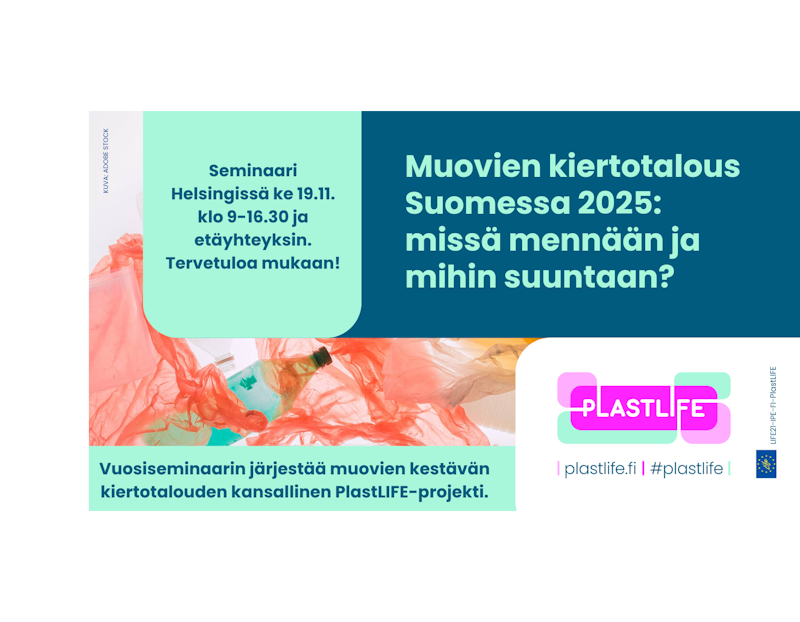
Image: Adobe Stock. Monitoring progress towards a circular economy in the plastics sector is still lacking. According to a report by the PlastLIFE project, improved data collection and better indicators are essential to identify bottlenecks and guide future actions.
More on the topic


Uusiouutiset newsletter