
29.8.2014 The ideal commodity is ecological to manufacture, resource-efficient to use and easy to recycle. We can expect such characteristics from more and more products in the future…
FEAD: A look at the circular economy from waste management to production




Recycling would be accelerated if a certain minimum percentage of raw materials used in the manufacture of some product groups were to be recycled, i.e. secondary raw materials.
The circular economy would be furthered if the export of household waste to landfill were banned across the EU. However, the export and import of waste materials between countries would have to be allowed so that secondary raw materials could compete on an equal footing with virgin materials.
This is the policy of the international organization for waste management, recycling and the environment FEAD (The European Federation for Waste Management and Environmental Services). President of the organization Peter Kurth spoke at a meeting organized by the Environmental Industry and Services Association YTP in the webinar September 2rd.
Product group-specific requirements
"I believe that the minimum content requirement for recycled materials in product raw materials is one of the key tools if we want to create a competitive secondary raw materials market," Kurth emphasizes.
The requirement could apply to some product groups in the automotive or plastics industry, for example. The content requirement for recycled raw materials would differ depending on the product and product group.
The EU has already set such a recycled content requirement for PET bottles: In 2025, bottles must contain at least 25 percent recycled recycled PET plastic. In 2030, the recycled plastic content requirement will increase to 30 percent.
Solutions are made during the production phase
FEAD President Peter Kurth recognizes that waste management and recycling operators alone cannot increase recycling, but there must be demand for the use of secondary raw materials in industry.
"It is not the job of the waste management and recycling sector alone to ensure that materials processed from recycling processes are reused. Companies in the sector are developing high-quality secondary raw materials, but in the circular economy, attention must also be turned to the production phase," he emphasizes, saying that the EU needs an ambitious production and product policy.
"Production must be involved in closing the cycles. This requires binding rules and ecological product design."
Waste incineration plays its role
Kurth points out that there will always be low-quality waste fractions that are not suitable for recycling. It should be possible to direct them to waste incineration plants so that their energy content can be utilized.
"The use of waste as energy must be included in the circular economy. Waste incineration plants are essential and they need a fair position."
Jobs in the circular economy
FEAD represents three thousand private companies in Europe operating in the fields of environmental services, recycling, waste management and the circular economy. FEAD is an umbrella organization that includes national interest organizations in the field. In Finland, the Environmental Industry and Services Association YTP ry is a member.
The organization's companies operate 2 recycling and treatment centers, 400 composting sites, 1 waste-to-energy plants and 100 landfills in Europe. The industry invests more than five billion euros in recycling and waste management annually.
Member companies now employ over 320 workers, but Kurth predicts that the implementation of waste directives and circular economy legislation could increase the workforce requirement fivefold to 000 million people in the coming years.
Requirements are getting stricter
According to Kurth, a circular economy will not happen by itself, but requires ambitious legislation and clear rules. The laws must also be implemented in practice and their compliance must be monitored.
FEAD is involved in several consultation processes in the waste management and circular economy sectors that prepare EU legislation.
Kurth estimates that at least thirty directives and guidelines related to the circular economy can be expected over the next two years.
“The music that Western countries will play tomorrow is being composed in Brussels today,” Kurth describes.
The news from Kaipola is worrying
The YTP webinar also discussed responsibility and the circular economy more broadly. The discussion was sparked, for example, by UPM's decision to close the Kaipola paper mill in Jämsä at the end of August.
The factory has been the largest recycler of recovered paper in Finland. The risk is that some of the paper fiber collected in Finland will end up incinerated in the future.
Minister of the Environment and Climate Krista Mikkonen took a stand on the question in a webinar:
"The news about the Kaipola factory is worrying. Kaipola has been a large user of our recovered paper. How do we ensure that recovered paper can continue to be directed towards fiber reuse and recycling as a material?"
According to Mikkonen, it is about a broader industrial transformation.
"I hope that the circular economy will also bring solutions to renew the competitiveness of the industry, make better use of materials, and increase the processing level of the forest industry."
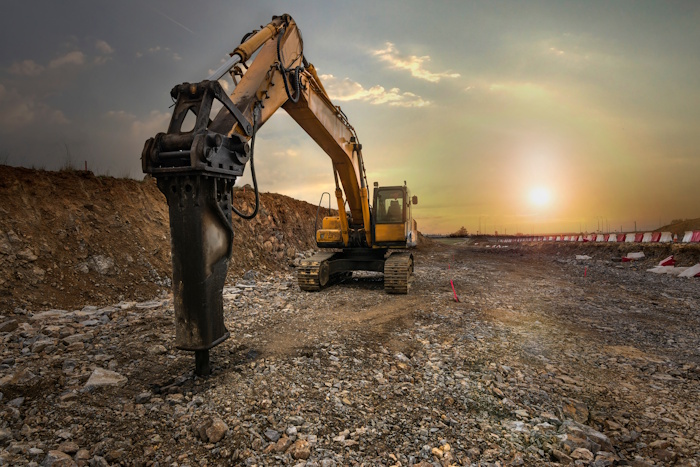
Photo: Scanstockphoto. The automotive industry already uses some recycled fiber, for example from textile waste, in vehicle upholstery and soundproofing. Can a minimum requirement be set for what percentage of the materials and raw materials used in a car must be recycled, i.e. secondary raw materials? FEAD President Peter Kurth believes that this topic will be discussed in the coming years.
More on the topic


Uusiouutiset newsletter