
I have worked in the circular economy for a long time and have met many established companies and start-ups in the industry in Finland, Europe and Silicon Valley. I often come across…
Slowing down climate action undermines European security



Europe has begun to hesitate to promote climate action and the circular economy.
Five years ago, everything seemed pretty clear: Emissions trading was considered central and its tightening was a widely accepted direction. In 2020, the EU published an ambitious circular economy strategy, which laid the foundation for investments in new sustainable business models and material recycling solutions. The same package also included a climate law that confirmed the EU's 2050 carbon neutrality target.
Geopolitics changes attitudes but does not reduce the need for climate and circular economy measures
Trumpi The election to a second term as US President has changed the climate of attitudes towards responsibility issues. Practices that were considered almost sacred have begun to be questioned very quickly.
At the same time, the investment environment has become less predictable. The natural consequences are weaker economic growth, investments in preparedness instead of growth investments, and waiting for the policy to become clearer.
Who would dare to make an investment decision at this time that is based on, for example, the increasing cost of carbon dioxide emissions?
However, geopolitical turbulence has not changed the basic premises of previous policies at all. One could even argue that it has increased the need for accelerated action.
Why is this? Couldn't we think like this: "Now we have to focus on the crisis at hand and there is no opportunity to invest in climate work"?
Let's look at the matter from a few different angles.
Europe's dependence on imported oil, gas and materials must be reduced by investing in renewable energy and the circular economy.n
Europe is highly dependent on imported oil and gas. Norway can only produce a small part of the EU's needs, the rest must be imported from the Middle East, Russia, the United States or, for example, Venezuela.
Is it really possible for us to build a winning strategy based on importing energy from these countries?
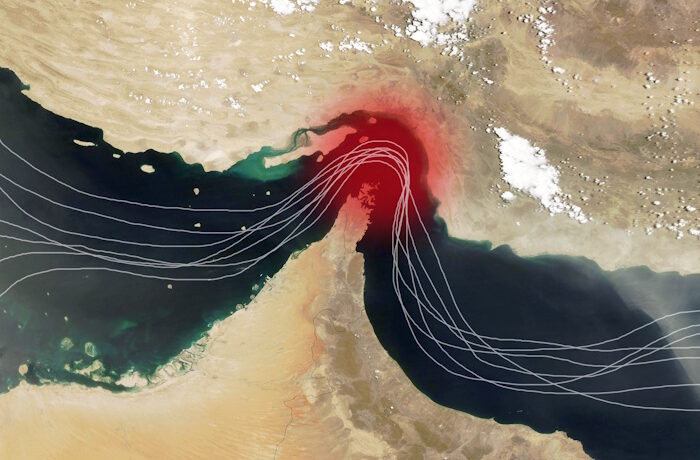
Solar and wind energy are often criticized for not always being windy or sunny, but the same logic can be used to criticize fossil energy sources. Oil does not always pass through the Strait of Hormuz. Transmission lines intended for gas transportation can easily be attacked.
In addition to security of supply, this is also a question of competitiveness, as renewables are often the most affordable way to increase new energy production, although storage and networks are also needed at the system level.
Those countries in Europe where the transition to renewables has been implemented sensibly have suffered the least from rising energy prices in the current crisis.
In addition to energy, the same applies to materials; we have very few of the materials needed by modern society native to Europe. There are shortages of oil, critical metals and fertilizers.
Sometimes we hear calls for self-sufficiency, for example by increasing the use of peat, but at the same time there is opposition to other self-sufficiency measures, such as investments in renewable energy and material circulation. Peat would have negligible significance in terms of overall self-sufficiency.
Climate change cannot be forgotten either
In addition to the security and economic reasons mentioned above, climate change continues to be an existential challenge threatening humanity, the effects of which are worsening year by year.
There is no time limit on combating climate change. Every year of delay in climate action will come at a huge cost, both financially and in human suffering.
Therefore, the discussion about easing emissions trading and slowing down environmental measures is a dangerous policy.
We desperately need a green transition. The main reasons are competitiveness, self-sufficiency and security, and the environment.
Although the transition was initially driven by environmental reasons, it has increasingly become a question of competitiveness and safety.
I would hope that politicians in the EU would keep their eyes on the ball and not succumb to populism and short-sighted politics.
Text: Kalle Saarimaa
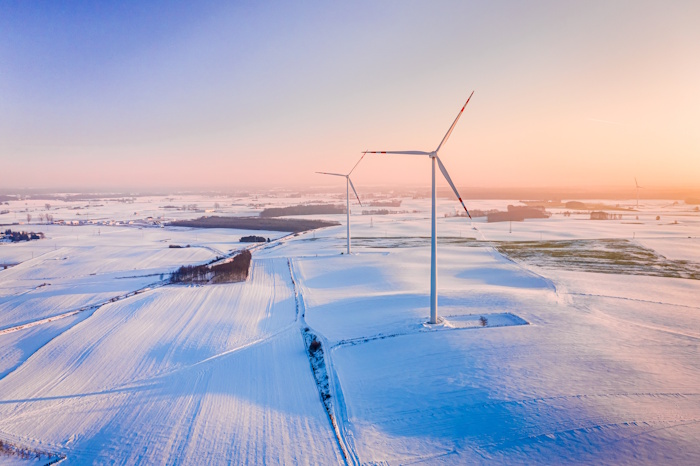
Photo: Adobe. Turbulent geopolitics has not reduced the need for rapid climate and circular economy action in Europe. On the contrary: The tensions have only strengthened the competitiveness and security advantage brought by the sustainability transition, writes Kalle Saarimaa in his Uusioblog.
More on the topic



Uusiouutiset newsletter