
The Finnish Quality Association awarded the Finnish Circular Economy Award for the first time, which is the first circular economy award based on external evaluation in the entire world. At the same time,…
The circular economy is a much-needed renewal strategy for many



The large-scale application of the circular economy is urgent because the overconsumption of the Earth's natural resources continues to accelerate, causing permanent damage to both the climate and the rest of the environment.
The Finnish government's employment goals require the creation of tens of thousands of jobs – that is, finding business areas that create new kinds of added value. The circular economy is a realistic solution to that problem as well. In a circular economy, production and consumption are based on the responsible use of materials and energy, as well as services, sharing, renting and recycling. Then the materials and the value attached to them circulate.
New jobs in the circular economy are created in product design, service design, recycling operations or extending product life cycles. Circular economy business also supports the preservation of production jobs as the product becomes more interesting. At the same time, competitiveness improves on many levels: new business models respond to market changes and customer expectations, resources are used more efficiently and energy is saved.
The transition to a circular economy is urgent, so it must be consistently accelerated. Sitra has developed a circular economy workbook for manufacturing companies, which helps them change their business to be circular. Similarly, the Quality Centre is incorporating the circular economy into the international EFQM management model. In many places, we are pioneers – the Finnish government wants to create a cross-governmental, strategic program for the transition to a circular economy, and tens of thousands of children are already studying the circular economy at all levels of education.
For companies, strategic renewal is a lifeline. It usually requires an initial push from the outside – from customers or investors. The circular economy fits their values better and better. We have identified many Finnish companies that have noticed the market interest. They have created new businesses – changed their raw materials to recycled ones, changed their processes to comply with the circular economy or made their products reusable. They have found a new growth driver in the circular economy.
In terms of expertise, Finland is ready for the next phase of the circular economy, but we need more activity from companies. There is information and models from pioneers available. Think about your business ideas, raw materials, processes and products. Where would the circular economy bring new efficiency, growth and brand benefits?
At the SME scale, new experiments can be carried out easily and quickly. It is better to take action now rather than a year later, and you will gain a head start over companies in competing countries.
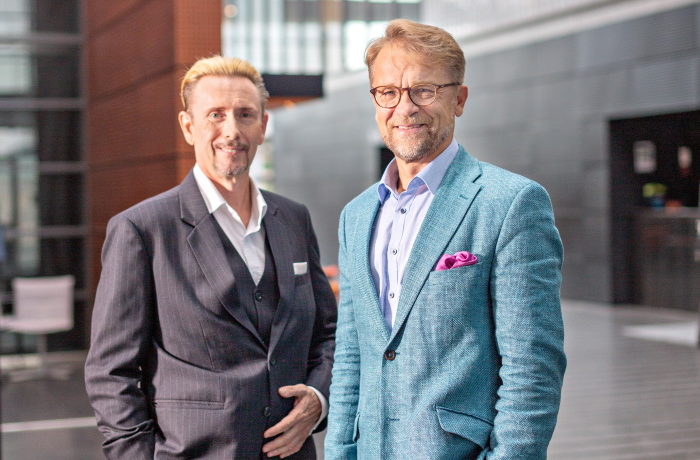
Tani Järvinen, CEO, Quality Centre
Mikko Kosonen, Senior Advisor, Sitra
Photo: Sami Kulju.
More on the topic


Uusiouutiset newsletter