What will the 2030s look like? Some visions of Finland in the 2030s no longer only look at economic growth measured by GDP, but also at the kind of well-being the economy produces...
In a fictitious war situation, the circular economy helped to survive: In a security of supply game, nutrient recycling secured food production



NEW BLOG
I am sitting in a conference room in the center of Tampere. It is the 2030s, November rain is pelting the windows. The room is filled with focused strategic discussions. Finland is at war.
The enemy has attacked Finland from two points across the land border. The attacks have damaged transport links. The main railway has been hit.
The Gulf of Finland and the central Baltic Sea are under a maritime blockade. The airspace is closed to civilian traffic.
Finland, which is dependent on air and sea transport, has had to resort to its emergency stocks. International supply chains are being disrupted.
My task in this room and that of my group is to think about solutions to a vital question: How can Finnish food production be secured in a crisis?
Fertilizer imports interrupted
The thought of Finland at war and food security being undermined is frightening. My fingertips get cold when I read the questions shared at the meeting, which we must make decisions about: What is most critical nationally? Which breaking points need to be resolved immediately?
For a long time, Finns haven't had to worry about whether they have enough food. We've been able to live in a time of abundance. We've been able to buy whatever we wanted from the shops.
However, it hasn't been very many generations since people died of hunger in Finland.
The war shows the fragility of international chains. The crisis also disrupts the conditions for domestic food production. Imports of mineral fertilizers are stagnant. Agriculture is in trouble: nutrients are desperately needed, as the growing season is short.
In a conference room in Tampere, our multidisciplinary team now has to figure out what nutrients we have available. What kind of infrastructure and capacity does using them require? What do we prioritize?
War is the ultimate stress test
In the middle of the conversation, someone from our group goes to get more coffee. We're about to take a lunch break. There, the buffet table is sagging because Finland is not actually at war.
It is actually November 2026, and there is Circular economy PirkanmaaThe Security of Supply Game, prepared by Economic Security Forum works as a security expert.
This is a project funded by the Pirkanmaa Regional Council called Security of supply game – Circular economy as a tool for security of supply.
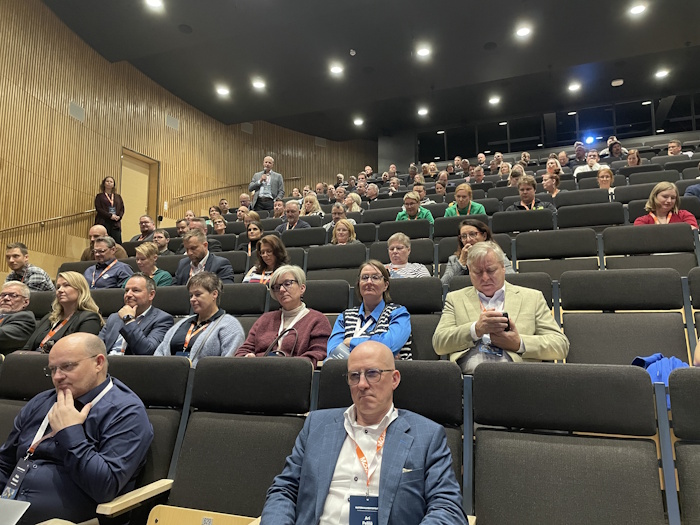
During the 18-month project, Finns from over 20 organizations have participated in the Supply Security Game: companies, publicly owned organizations, authorities, ministries, and research institutes.
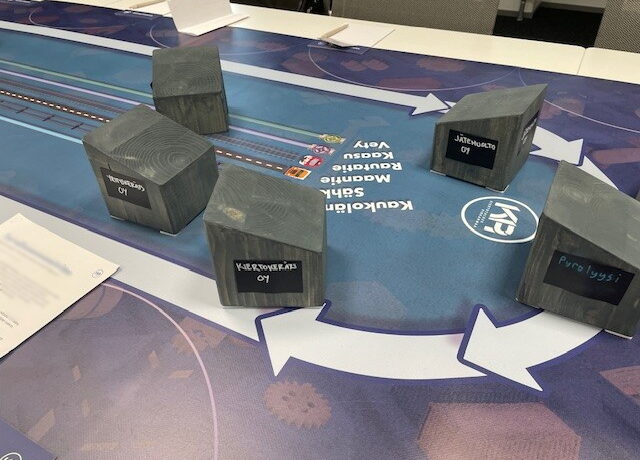
In the security of supply game, actors from different sectors will jointly consider how the circular economy can help overcome crises.
In the background of the Security of Supply Game is also the Security of Supply Centre's report published in October. report on Ukrainian doctrines.
Fortunately, it is unlikely that Finland will be at war in the 2030s. However, the scenario can be useful for such a thought exercise.
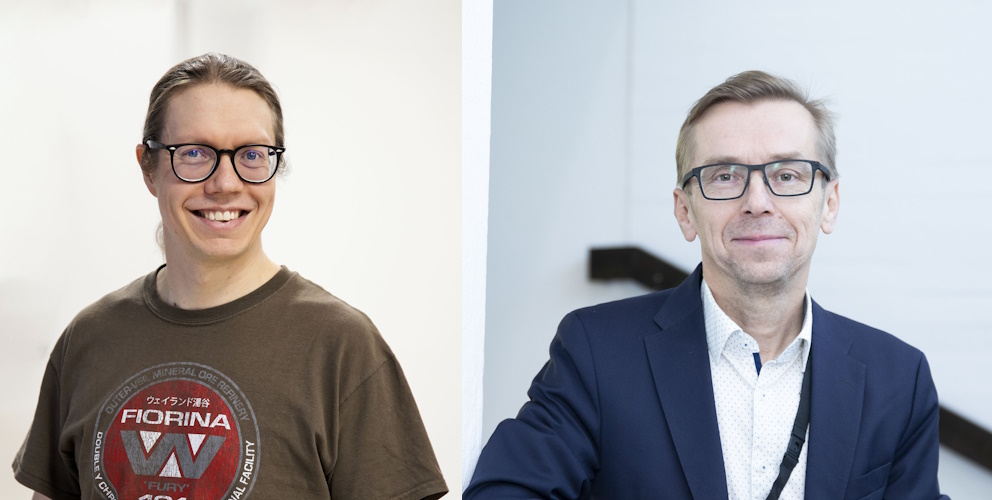
"War is the ultimate stress test for society. It reveals what you can't live without," says the creator of the game situation, the Economic Security Forum. Henri Vanhanen.
The crisis may escalate
Circular economy in Pirkanmaa Katja Alakerttula sets the stage for the game by reminding us that a crisis is not a single moment but a long process. In the game's fictional scenario, war has erupted after price and trade wars and hybrid warfare escalated.
Vanhanen emphasizes that preparedness is not just about preventing damage, but also about maintaining and restoring operational capacity. The ability to repair is just as important as the ability to protect.
Circular economy gives time
The games have shown that the circular economy improves society's ability to cope in demanding conditions.
The circular economy gives time to make the necessary changes to production so that society can maintain basic services and secure food supplies, for example. The circular economy helps to ensure technical and production continuity even in long-term crises.
Circular economy solutions, such as repairing and reusing existing products, strengthen security of supply and resilience.
Waste and side streams can prove to be valuable resources.
Our gaming group also comes to this conclusion. When we can no longer rely on imported fertilizers, the nutrients needed by plants will be supplied to the fields from domestic recycling streams.
Waste-based circular fertilizers prove to be critical in ensuring the continuity of agriculture.
Recycling capacity already available
We players are greatly helped by the starting assumption of the Security of Supply Game: by the 2030s, societies have already changed so much that the circular economy has become a central part of the competitiveness, security of supply and industrial policy of Finland and the whole of Europe.
Circular economy legislation is in force in the game world. Finland has also achieved its targeted circular economy rate of 24 percent.
So Finland also has biogas and recycling plant capacity. Companies and municipalities have built efficient waste and side stream utilization chains. Collection logistics work.
It would be very difficult to start building these systems only after the war breaks out. There is a shortage of energy and all resources. Even under normal circumstances, setting up a recycling fertilizer factory would take years, so it would not be ready in time for the first emergency.
In our game, biogas plants and the necessary recycling infrastructure already exist, thanks to a gaming society that has become aware of the circular economy.
All recycled nutrients available
Biogas plants prove to be worth their weight in gold in our game. They produce not only recycled phosphorus and nitrogen, but also humus and organic matter needed by the fields, as well as biogas, which can be used to move suitable equipment. Biogas vehicles also run when there is a shortage of natural gas or electricity.
Our group harnesses everything suitable for nutrient use: manure, grasslands, agricultural and food industry waste, residues and side streams, even human waste.
Despite the premise that the circular economy is positive, a military crisis is apparently needed to clear away prejudices and legal obstacles and put the nutrients contained in urine to good use.
We don't have time to renovate the water toilet systems in apartment buildings, but separating dry toilets have been invented.
Food from the air
We notice that shifting the Finnish diet to a more plant-based one would help with survival. Balcony and urban farming, as well as the preservation and self-sufficiency skills taught by Martta, work in a rich way.
We are looking for alternative protein sources, for example legumes, whose cultivation also helps maintain the nitrogen balance in the field. Regenerative agriculture that is compatible with the principles of the circular economy and the crop rotation that it includes bring flexibility to food production.
We talk about agroecological symbioses and farm-scale plants. We compare decentralized and centralized production.
We turn over every stone in the field of innovations and technologies. We discuss protein produced from grain and insect food companies. We consider vertical farming and the use of waste heat from data centers in nutrient cycles. Finnish space technology also comes to mind, the Solar Foods method that creates protein from air.
Finland has the expertise and technology, but would it be possible to expand the solutions quickly enough, especially in a state of war?
Generational responsibility even in war
There are many obstacles, but we are still in trouble. There is a shortage of equipment, fuel, chemicals, plastic and data in our game situation, as well as workers and expertise. Transportation, storage and lack of application equipment are causing headaches.
Spare parts can be conveniently 3D printed in our game. But will automated manufacturing really be widespread enough by the 2030s? That's only a few years away.
We also find ourselves pondering moral questions. In a war that has lasted for years, we would also use ashes and many other currently restricted wastes for field fertilization, even though we know that they can accumulate heavy metals, microplastics, or pharmaceutical residues in the soil.
It makes you think about what kind of pollution bomb we are planting for future generations if we only think about our own short-term survival and ignore the usual restrictions.
We have to admit that there are not enough resources for everything. Choices have to be made, priorities have to be set. The absence of one piece can prevent the entire utilization chain from functioning.
Our group mercilessly takes the food out of the mouths of pets, because there is an even greater need for nutrients.
Who would decide in a real situation what is most important?
Snacks for decision-makers
The game is over. We have returned from the fictionally bleak 2030s to November 2026 and peace. We unpack the thoughts the game has stirred up, both worried and relieved.
The security of supply game is a great way to highlight the importance of the circular economy in security of supply. I hope decision-makers can also get involved in the game.
The next elections will elect to Parliament those decision-makers who will make critical strategic choices at the beginning of the 2030s.
Everything is in short supply during a crisis, but especially time. We would be best prepared if we accelerated our society's transition to a circular economy during good weather.
Text: Elina Saarinen, Uusiouutiset
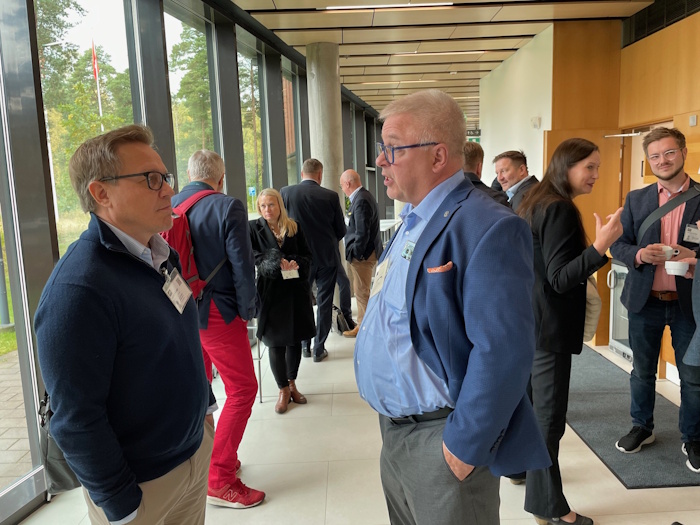
Photo: Elina Saarinen. The security of supply game demonstrates the benefits of the circular economy as a tool for security of supply.
More on the topic



Uusiouutiset newsletter