

Juha Lehtikuja, CEO of the Helsinki Metropolitan Area Recycling Centre, hopes that reuse in Finland will rise to the position it already deserves according to the waste management priority order: the most important…
What is the new normal for reuse?



The reuse industry is going through a period of transition, as both legislation and technology bring new obligations and opportunities. What is changing, what should change, and how does the change affect the reuse industry as an employer?
The questions were discussed at a workshop organized by the RENET reuse network, the Living Foundation, the ICELife project and the Finnish Recycling Centers Association. At the Reuse Professional Days In Kuopio, 3–4 November 2026.
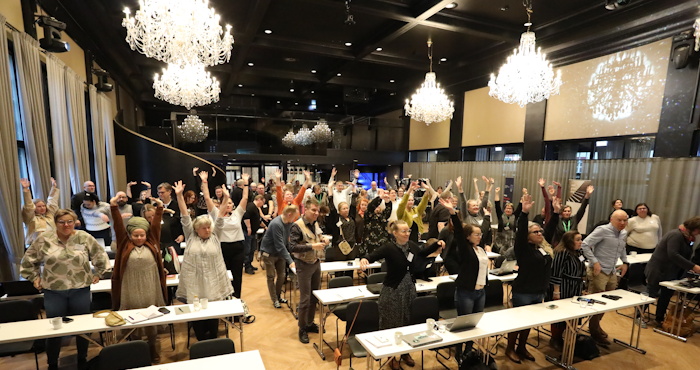
The first day of the event included a guided tour of the new generation circular economy center Matkus Luuppi. The second seminar day was held in Puikkarisali with over 100 participants.
From one-time sale to life-cycle value creation
The event's program highlighted that the transformation of the reuse sector is not just about more efficient processing of material flows, but also requires solving mismatch problems in a wide range of meanings.
The keynote address of the seminar day was given by the Finnish Association of Speciality Shops. Taija Lintumäki (Director, Foresight) examined the change in the retail revenue logic from one-time sales to value creation throughout the entire lifecycle using various scenarios.
Lintumäki's presentation can be summarized as follows: in terms of the conditions for growth, it is essential that consumer behavior, what companies offer, regulation, technology, and infrastructure develop in parallel.
Technology is changing work in the reuse industry
Developments in technology and service offerings are also changing the needs for work and the focus of expertise. Employment and social responsibility are central to the activities of the Living Foundation, as are many of RENET's members.
The reuse industry offers a wide range of employment opportunities and forms of employment, which is why technological development also raises questions about the future of work.
Technology can make some work stages more efficient or replace them, but at the same time, the growth of reuse and services aimed at extending the life cycle of products can create new types of work and increase the need for, for example, repair and refurbishment.
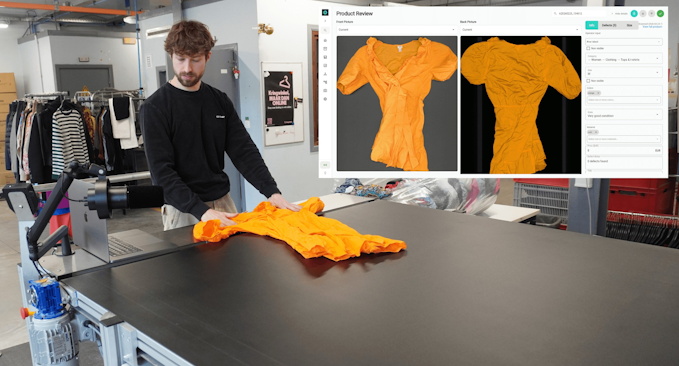
The technological development of the industry was represented at the event by, among others, a startup company Trosort, whom SortMateThe device sorts textiles for reuse and recycling with the help of artificial intelligence.
The device identifies the product category, quality, material content and brand and assigns a selling price to the sorted clothes, while the human role is to place the garment on the conveyor belt.
It is worth noting that the device also estimates the repair possibilities and costs of damaged clothing. The goal is to return repairable products to use instead of recycling them.
CEO of the company Achille Mathot sees an underutilized environmental and economic value in returning broken clothes to circulation.
“SortMate does not replace employees. Organizations can handle larger volumes with the same staff or move employees to activities with high growth potential, such as repair and upcycling,” Mathot emphasizes.
Mathot also notes that the device makes sorting easier, which makes it possible to offer work to a wider range of people than with manual sorting.
The amendment initiative received widespread support
However, the availability of repair services will not be able to develop in line with demand if there are not enough new experts entering the sector or if providing the services is not profitable for the providers.
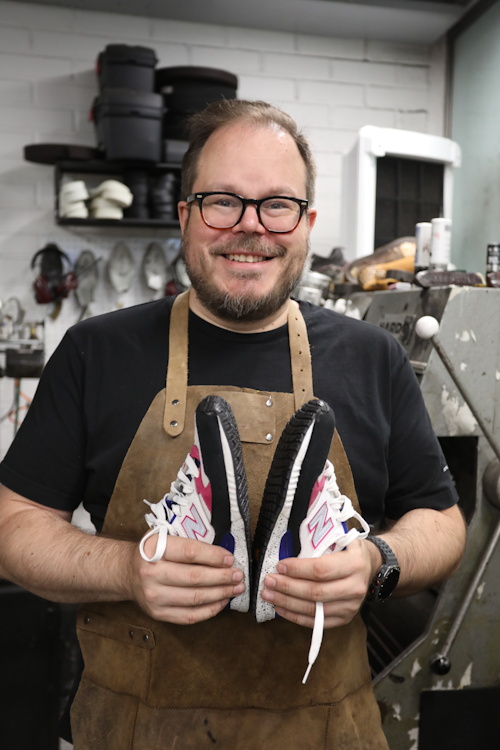
The master shoemaker brought up the imbalance in his speech. Ville Hasala, which proposes reducing the VAT rate on repair services from the current 25,5% to a lower rate (13,5%) as a way to improve profitability.
Initiated by Hasala Citizens' initiative to reduce VAT on repair services collected over 51,000 signatures of support within the deadline and will advance to Parliament in 2027.
You can follow the progress of your initiative from the correction initiative website.
The operating model of the magnifying glass helps to assess the quality of the goods
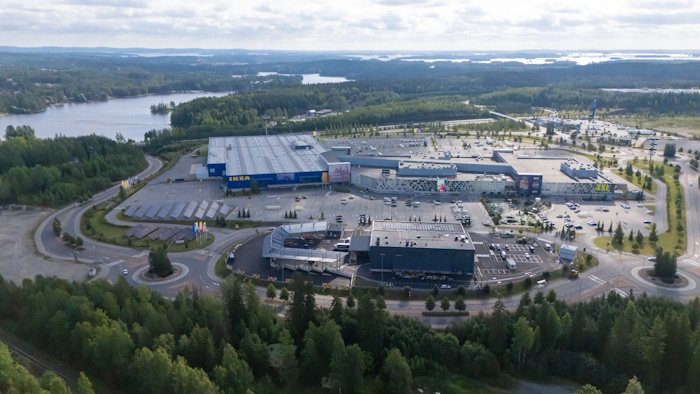
Encounters with consumers are also promoted Travel Luuppi.
Luuppi is a unique entity in Finland that combines the reception, reuse and sorting of used goods, as well as a strong social inclusion perspective.
At Luuppi, the donor and recipient of the goods literally meet, as each batch of goods is received and reviewed together with the donor.
While it is generally difficult to monitor the quality of goods donated for reuse, Luupi's model allows for both assessing the suitability of a donation for reuse and providing guidance to consumers.
At the same time, material unsuitable for reuse is directed directly to the center in Luuppi. To the waste sorting station for material recycling.
The magnifying glass also works ICELife project as a pilot environment where new reuse solutions are tested and developed.
Regulation holds textile producers accountable
National legislation on the Waste Framework Directive is also bringing textiles under the scope of producer responsibility. In the future, producer companies will be responsible for collecting, sorting and organizing and financing waste management of discarded textiles. Producer communities will become part of the reuse network.
During the seminar day, producer responsibility was discussed in a panel discussion with the Finnish Textile and Fashion Association. Emilia Gäddan ERP Finland brought their own perspective to the topic. Olli Alanen, Finnish Renewable Energy Association KIVO Kaisa Halme and the Helsinki Metropolitan Area Recycling Centre Jenni Rainman.
As a highlight of the discussion, Alanen highlighted lessons from the system already in use in France. Although the intention of the legislation is good, the detail and complexity hinder the practical operation of the system.
In Finland, too, the producer responsibility system is being built in an environment where textile collection and processing is already carried out by various actors, from municipalities to third sector organizations. The success of the system requires the coordination of different interests without the complexity of the regulation becoming an obstacle to practical operations.
Projects promote reuse
The event highlighted not only the importance of collaboration between different actors, but also the role of projects as drivers of reuse. Projects bring together actors, pilot new operating models and advance practical development work.
Many in the audience represented various reuse projects.
"The greatest value of the Reuse Professional Days for myself and my own work was seeing concrete examples and networking with other industry players and developers. I am building a new model for borrowing and sharing goods in Mikkeli, so it was valuable to hear about the successes and challenges of other players," says Mikkeli Development Company. Miksei Oy Project Manager Outi ValkonenHe is involved in developing the sharing economy. In the Jakes Demot and Jakes Investointi projects.
“During the event, I noticed that there is a genuine demand for reuse solutions. My own projects are part of this important work and a larger whole, which also involves changes in consumer behavior and the appreciation of goods and crafts.”
The next Reuse Professional Days in Helsinki
The event concluded that the diversity of the reuse sector is not a challenge, but an asset. However, the sector needs a stronger voice and professional advocacy work that identifies not only the needs of different sectors, but also the opportunities for cooperation between them and a national perspective.
Here, RENET, as a national operator, has the opportunity to grow into an increasingly significant player uniting the entire reuse sector.
Next, industry players will gather at the invitation of RENET for the Reuse Professionals' Day in Helsinki on October 12-13, 2027.
Information about RENET's activities and events can be found here. from the association's website.
Text: Maj-Lis Viitanen, commercial developer of responsible business
Image: Trosort. The SortMate device scans a garment placed on a conveyor belt.
More on the topic







Uusiouutiset newsletter