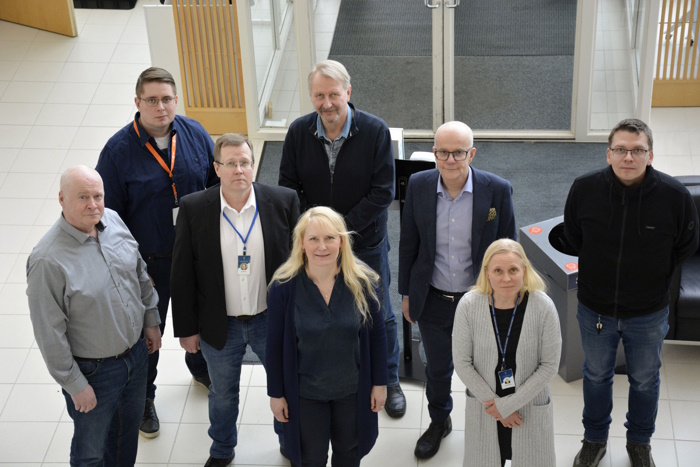
A new circular economy competence center has been established in Jyväskylä, which includes several organizations specializing in research and development activities and companies investing in the circular economy. The Jyväskylä network…
A new source of raw materials for recycled fertilizers – Weeefiner recovers dissolved nutrients from fish farms




Weeefiner Oy, which specializes in the recovery of valuable and harmful substances from wastewater, is developing a new method to utilize dissolved nutrients formed in fish recirculating water farming.
Nitrogen, nitrate, phosphate and potassium, which have so far remained unused or ended up as waste, can be recovered and used to produce raw materials for recycled fertilizers.
There have been very few ways to capture dissolved nutrients.
However, studies conducted with Weeefiner technology have yielded very promising results regarding the recovery functionality.
“Dissolved nutrients that previously posed challenges can now be selectively recovered using a 3D-printed catcher,” promises Weeefiner’s CTO Elmeri Lahtinen.
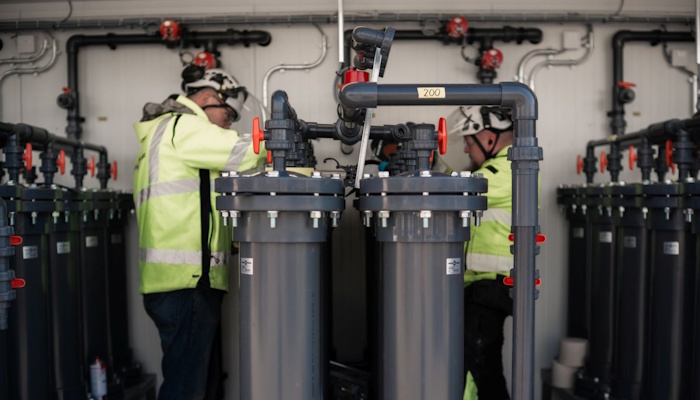
The recovery technology, which originated at the Department of Chemistry at the University of Jyväskylä, is based on customizable, printable filter units through which water is pumped.
The material composition of the filters can also be adjusted as desired, which allows the 3D catcher to expand into a 4D solution.

The Natural Resources Institute Finland is also involved in the project.
The South Ostrobothnia Regional Development and Economic Development Centre has granted support to the Weeefiner project from the Nutrient Recycling Pilot Programme. The programme, which was implemented in 2020–2022, has received an extension and additional funding for new research and innovation projects by decision of the Ministry of Agriculture and Forestry.
The eighteen-year project focuses mainly on nutrients left over from fish recirculation aquaculture, but it also maps other sites where there is potential for recovering dissolved nutrients.
Weeefiner's partner in the project is the Natural Resources Institute Finland (Luke), which provides a piloting environment for the Jyväskylä-based company's technology at its Laukaa fish farm.
"Recirculating fish farming is an activity subject to environmental permits, so managing nutrient emissions is an essential part of the farming operation," explains the researcher. Jani Pulkkinen From the Natural Resources Institute.
"Typically, the phosphorus in fish sludge is bound with chemicals and the nitrogen is evaporated into the air, making it no longer useful," Pulkkinen describes the current situation.
A valuable source of recycled nutrients
If and when dissolved nutrients are efficiently recovered, fish farming side streams will become a new, valuable source of recycled nutrients.
At the same time, nutrients are prevented from getting into the wrong places and the waste load from fish production is reduced.
"In the current global situation, it is particularly important to reuse nutrients, as there is a global shortage of nutrients. When they end up in the environment, they can cause significant harm, such as eutrophication," says Weeefiner's CEO. Mikko Hanninen.
According to preliminary calculations by the operators, it could be possible to recover up to over 200 kilograms of nitrogen per year from Finland's largest recirculating fish farms. In addition, there are other biomasses to which Weeefiner's technology can be applied.
Text: Päivi Ikonen/ Kemiamedia.fi
Photo: Weeefiner. Natural Resources Institute Finland researcher Jani Pulkkinen and Weeefiner Oy CEO Mikko Hänninen present the pilot site of the research project, the Luken fish farm in Laukaa.
More on the topic

Uusiouutiset newsletter