
The Finnish Nature Association's Don't Buy Anything campaign this year focuses on ultra-fast fashion and the dark side of the textile industry, as the textile and fashion industries pollute more than…
Online, hooked – A consumer's purchasing decision today can impact the fashion industry for decades to come




What would you wear next?
In an advertisement for an online clothing marketplace Sarah Jessica Parker He is busy blaring this question on his cell phone in the hustle and bustle of the city.
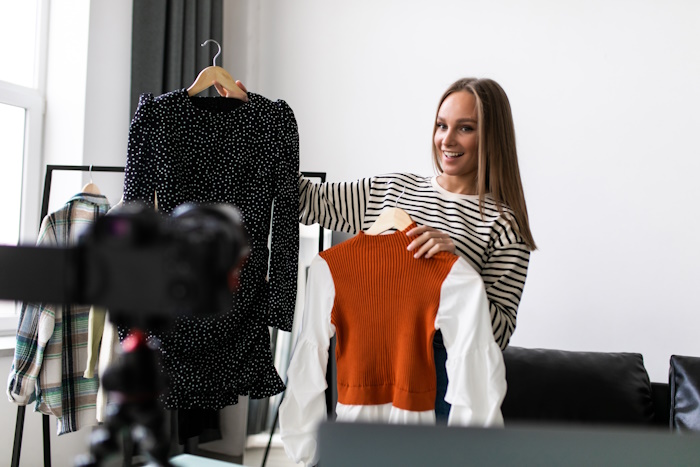
Buying clothes online has become easy and attractive. So attractive, in fact, that it's starting to be problematic, and not just from an environmental perspective.
End of April There was an article in Helsingin Sanomat. From research by the University of Jyväskylä. The survey data showedthat one in six Finnish young adults has developed a functional addiction to online shopping.
Online stores are using so-called dark design, which means they inject gamified and addictive elements into their shopping platforms. This is effective: According to a Chinese study, in Temu and Shein's home country, as many as 29 percent of the population is already addicted to online shopping.
Online shopping threatens to disrupt the sustainability transformation of the clothing industry
Shopping addiction can cause compulsive shopping that dominates everyday life, takes up time and money, causes distress, and causes disputes in close relationships.
In addition to the social disadvantages, the environmental problems of overproduction of cheap fast fashion are obvious. Ultra-fast fashion is of such poor quality that it is not suitable for reuse or even recycling as a material.
The avalanche of clothing driven by online stores threatens to overwhelm the transformation of the fashion industry that has emerged in the circular economy.
Poor recycling applications for mixed fibers
Most EU member states began collecting post-consumer textiles for recycling at the beginning of this year. However, the mixed materials used in clothing, a mix of synthetic fibers and elastane, are a recycler's nightmare.
Textile waste has begun to accumulate in the warehouses of European sorting plants, as there is no demand for it in the market.
Clothing brands have been slow to embrace the use of recycled fibers as raw materials in their clothing collections. They are still waiting to see what the upcoming Waste Framework Directive and the resulting producer responsibility for textiles will mean in practice. This has led to a lack of funding for recycling innovations and circular economy development projects.
Will the tariff war bring an avalanche of Chinese clothing to Europe?
Tariffs imposed by the United States could multiply the problems. If the fast fashion road from China to the US market takes off, the flood of clothing could crash into Europe like a tidal wave.
If billions of dollars in cheap clothing from online stores clog up all channels, it could take away the living space and the last resources from European fashion brands. Who will invest in the circular economy then?
Now, if ever, the consumer has the power to influence whether we get hooked. A small decision to buy, or not to buy, can influence fashion trends for decades.
It's worth thinking about what you're wearing.
Text: Elina Saarinen/ Uusiouutisetmagazine. The text was published as an editorial in Uusiouutis 3/2025.
Photo: Tero Pajukallio. We are living in decisive moments in the circular economy transition of the clothing industry. The consumer has an exceptional opportunity to influence the direction of the future, writes Elina Saarinen, editor-in-chief of Uusiouutisten, a specialist magazine for the circular economy.
More on the topic






Uusiouutiset newsletter