
(For subscribers.) For all curious business people. This is the dedication in Anne Raudaskoski's new book, the publication of which is celebrated today, March 12, 2025. Raudaskoski's Circular strategies…
In the Netherlands, you can make money from waste – This is how a new type of recycling business works
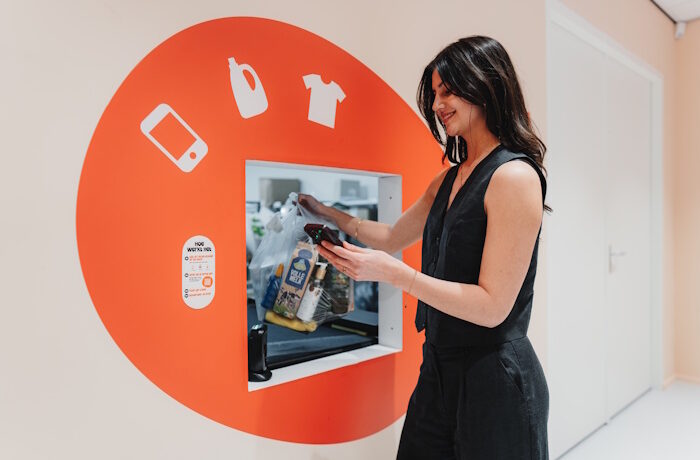



Droppie's innovative business model made waste sorting rewarding. In the Netherlands, consumers receive money for returning scrap equipment or reusable items.
Dutch Droppie has developed a new kind of business out of waste collection. It rewards consumers for sorting, saves electronics for reuse, and collects cleaner plastic for recycling.
But how can a company afford to pay consumers for their waste?
Founder of Droppie Natascha Hermsen believes it has found a solution by combining completely different services with waste collection.
“Sorting needs to be made easy, fun and rewarding for people,” Hermsen sums up.
A careful sorter is rewarded
Founded about three years ago Droppie is a concept that encourages consumers to sort their waste and bring it to a Droppie store that acts as a collection point. The concept includes an app that shares information and gently nudges them to do the right thing.
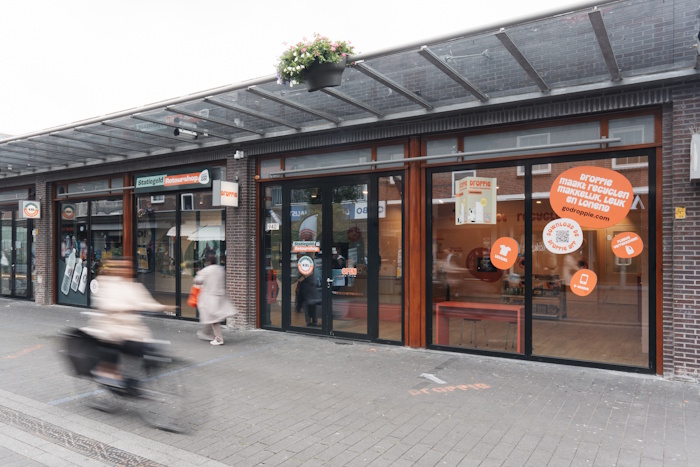
There are a total of 15 Droppie points in the Netherlands, easily recognizable by their orange brand and playful logo.
Consumers who drop off their waste or usable goods at Droppie will receive a prize of their choice from the app.
The reward can be a virtual shower of confetti with praise, a discount coupon or a raffle ticket. Or the consumer can choose a local charity to support through Droppies. In The Hague, the consumer can support a local sports club, an animal ambulance or a group that collects plastic waste from the beaches of Scheveningen. Trashure Hunt environmental education work.
One million euros in incentives
Droppie also motivates consumers with pure money. By bringing plastic packaging waste, discarded clothing, electrical and electronic equipment, used cooking oils, furniture, books, bicycle helmets, sleeping bags or even toys to Droppie, consumers can earn a few dozen cents. Children's bicycles are rewarded with five euros.
“We have already distributed prizes worth one million euros through our stores in The Hague,” says Droppie’s head of operations in The Hague. Jen Budding counts.
In three years, over 180,000 waste consignments have been imported to five stores in The Hague.
Electronics for reuse
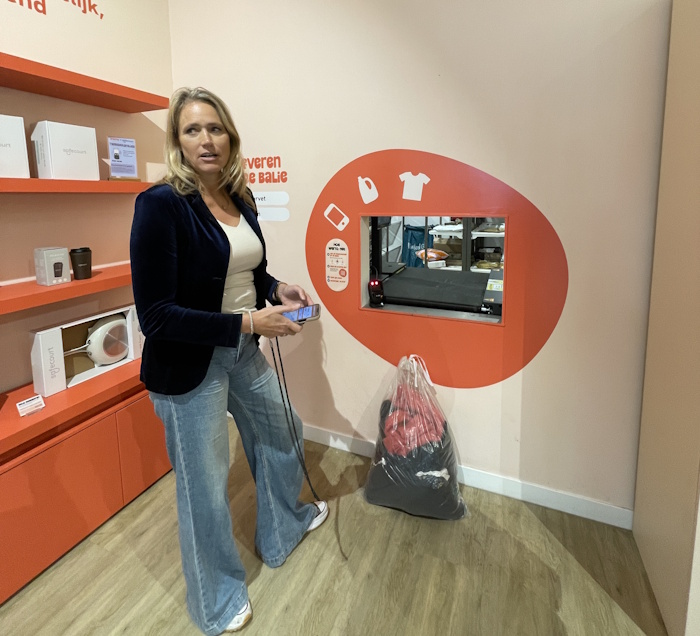
Droppie has proven to be a good channel for collecting, among other things, waste electrical and electronic equipment (WEEE).
In stores operating in clean indoor spaces, devices can be collected in a way that does not break down during the collection process and does not remain in collection containers at the mercy of the weather.
The store's staff sorts and collects, among other things, laptops and other reusable electronics from SER.
"We sort devices that are lost with other scrap through traditional collection methods. For example, modems and routers are rarely even broken when people bring them in for collection. We have found that almost 80 percent of them are still suitable for reuse," says Hermsen.
A total of 35 percent of the SER received by Droppie has been directed for reuse.
Producer communities are Droppie's partners.
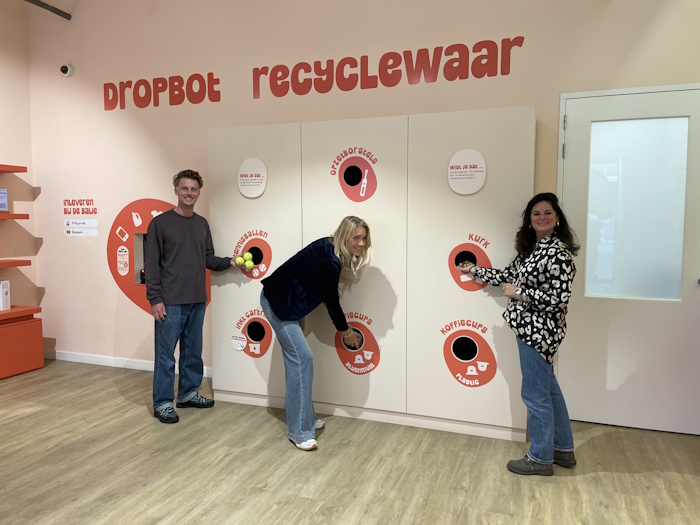
Droppie focuses on emerging waste streams and also conducts experiments: Coffee capsules or old tennis balls have been dropped into the holes in the store's sorting wall. Books have also been saved for reuse with the help of a local partner.
Recovering plastic cleaner
The Droppie network complements the municipal waste collection system, which collects, among other things, biowaste, glass, paper and plastic.
In large cities in the Netherlands, for example, the source separation of plastic has decreased because it has been sorted in mechanical sorting plants that have been set up to separate materials that are still suitable for recycling from the waste stream going to incineration.
The recycling rate is reduced by the poor quality of the plastic waste collected in this way. There are so many impurities that more than a third of the plastic waste may be suitable only for low-value recycling or may not be recyclable at all.
Droppie has invented a way to recover plastic packaging waste as a cleaner stream.
"We realized that when people go shopping, they tend to buy the same specific products every week. If we can inform them how to sort and recycle the packaging from these purchases, we will create cleaner waste streams," says Hermsen.
Droppie ran a neighborhood counseling campaign for a few months. Counseling is also available in-store and via the app.
“We were able to reduce the percentage of impurities from 35 percent to one percent,” Hermsen illustrates the power of the advice.
Clean waste streams may be an asset in the future, as the EU Packaging and Packaging Waste Regulation increases the obligations of plastic packaging producers to use recycled plastic in the manufacture of packaging.
How to make waste collection profitable?
The cleanest possible waste streams and local partners help improve the financial profitability of Droppie's operations.
That's not enough. Sorting and receiving waste incurs so many costs that the operation is not yet profitable through reuse or recycling alone, especially since in addition to space rent and personnel costs, Droppie also gives money to consumers who bring waste.
Hermsen says that two of Droppie's 15 stores are already profitable. The business has been turned into a profitable one.
“Our magic trick is that we combine the sorting concept with other business models, the revenue from which we finance the costs of sorting.”
Hermsen has worked as a business strategy consultant for over a decade, and knows that the key factor is getting enough customer traffic to the store.
Droppie's most popular store in Utrecht is visited by over 700 customers a day.
Droppie is not just a waste collection point, but the stores also act as centralized pickup points for packages ordered from online stores. When people go to pick up their online purchases, they also see the sorting side. The concept entices them to come back next time with a waste bag.
Deposit bottles support the sorting of other waste
Another attraction that has attracted people to the store has been the return of deposit beverage containers.
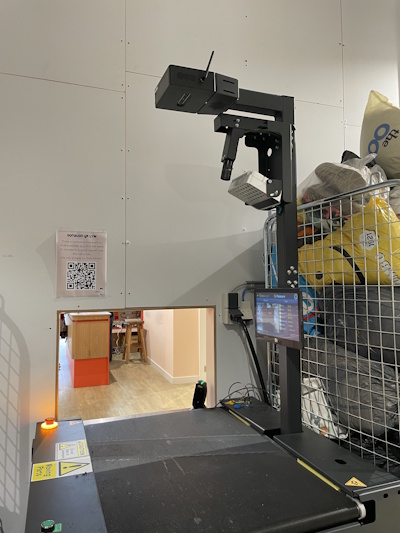
In the Netherlands, the bottle deposit system has only recently expanded to include beverage bottles and cans. Droppie has a system in its stores, implemented in collaboration with Tomra, where customers can pour an entire bag of bottles and cans into it at once.
These return machines, which accept large batches at once, are not typically used in supermarkets in the Netherlands, as they are in Finland. That is why they have become an attraction for Droppie.
Tennis balls bounce back
The stores also sell responsible products that may be somehow related to the waste fractions people bring to Droppie.
For example, on sale are: Renewaballin padel balls. They are made from – used tennis balls.
Droppie also accepts used ink cartridges, so there are some for sale. Recycle Club refilled ink cartridges.
"Usually, the moment when a person has thrown away an old ink cartridge is the most opportune time to purchase a new replacement product," Budding reminds.
From the Netherlands to elsewhere?
Hermsen sees that after conquering the Netherlands, Droppie will also head for the international market.
“This will be a profitable concept, at least in countries with a deposit bottle system. The store will work if there are enough people living within a 1,5 kilometer radius.”
Text: Elina Saarinen, Uusiouutiset
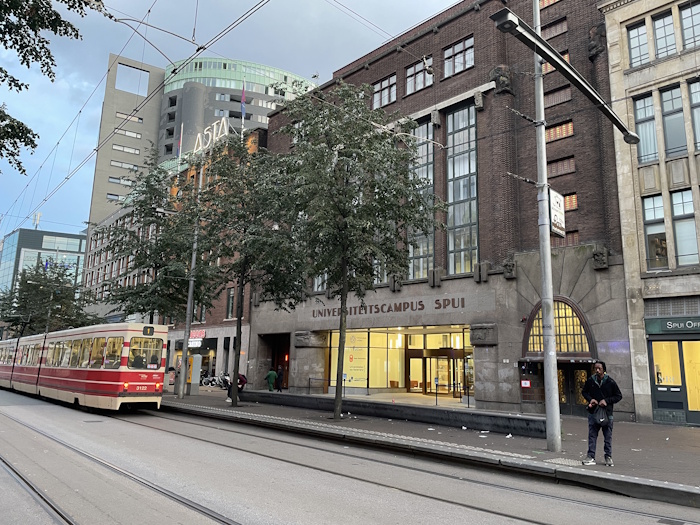
Photo: Droppie. There are already five Droppie stores in The Hague.
More on the topic





Uusiouutiset newsletter