
(For subscribers.) The Finix project, which is coming to an end, pointed the way towards a sustainable textile industry. The global situation has increased the difficulty factor of the sustainability transition. Cheaper, smarter or more ecological. That is what the circular economy is all about…
Statement: Only textile waste that can be genuinely utilized should be collected separately.



Operators in the textile circular economy chain have taken a position on the implementation of a textile and footwear waste collection system.
According to the operators, when building a system, the goal should be to collect the highest quality material flow possible, which is suitable for reuse or recycling as material.
The system must also be appropriate in terms of costs and environmental impacts.
No opinion have signed at the end of September the Finnish Renewable Energy Association, the Finnish Textile & Fashion Association, the Finnish Commerce Association, the Finnish Association of Local and Regional Authorities, the Finnish Fashion and Sports Trade Association and the Renet Reuse Network.
Contaminated material would burden the system
In the opinion of the operators, the collection system should not be based on the premise that it only aims to achieve the largest possible collection volumes if no real reuse or recovery channels can be found for the collected material.
It is not advisable to collect unusable material separately because it burdens the system, increases costs and produces environmental impacts without corresponding circular economy benefits.
"In addition, collecting dirty textiles in the same collection can ruin reusable textiles and thus ultimately reduce the amount of textiles that are diverted for reuse," the statement states.
If soiled, separately collected textile waste then has to be delivered for energy use, this can weaken consumers' trust in the system and erode the motivation to sort.
How will separate collection be organized in the future?
In recent years, municipalities have been responsible for the separate collection and waste management of household textile waste.
However, the EU's new Waste Framework Directive stipulates that Manufacturers and importers of textiles and footwear will be responsible in the future on the reuse, separate collection, transport and recycling of textile waste and the organisation of other waste management.
It is still unclear how producers will organize this, and whether they will utilize the system previously built by municipalities in any way.
The signatories of the statement emphasize that regardless of whether the collection is organized by municipal waste facilities, social economy operators, producers or their partners, only usable textile and footwear material should be collected separately.
Separate collection can be expanded later
According to proponents, it is worth investing in consumer sorting instructions and communication, especially when the future producer responsibility collection system for textile waste is launched.
It is worth starting collection with the cleanest streams that are best suited for utilization.
Only when functional recovery solutions have emerged for currently unrecoverable textiles will it be worthwhile to expand separate collection to these materials.
Waste textile fibers collected by municipalities from households have been difficult to find recycling use. Developed the circular economy of textiles Lounais-Suomen Jätehuolto decided to give up a year ago from its operations of sorting and recycling of discarded textiles. The operations will continue Turku Eco Market.
Separately collected textile material also in Europe has accumulated in warehouses waiting to be utilized because there has not been sufficient market demand for recycled fibers. There have also been quality problems with textile waste that make further utilization difficult.
Text: Elina Saarinen, Uusiouutiset
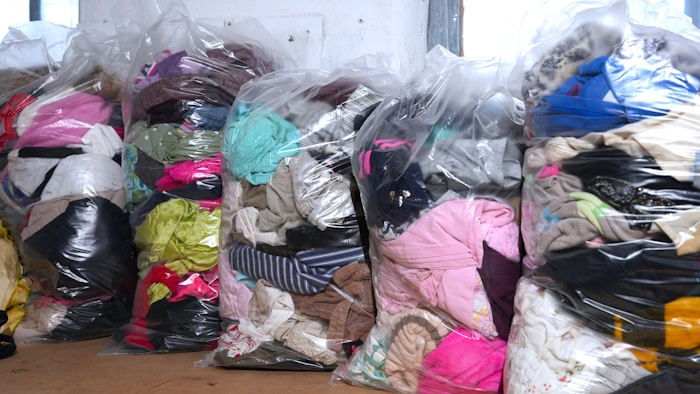
Image: Adobe Stock. Even a small amount of moldy clothing in a collection can ruin a large amount of separately collected textile material.
More on the topic





Uusiouutiset newsletter