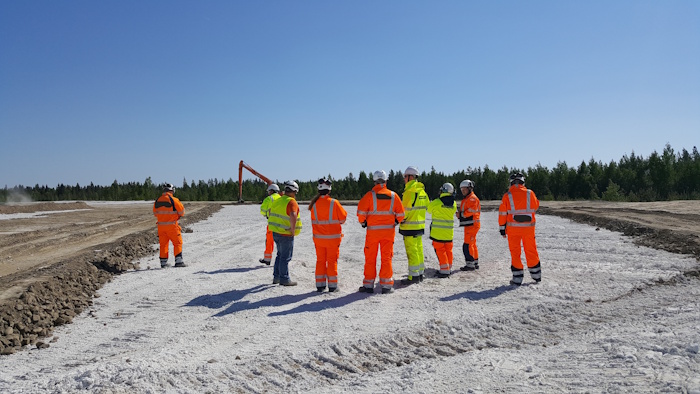
This year, the UUMA network celebrates its 20th anniversary as a promoter of the utilization of recycled materials in infrastructure and civil engineering. At the same time, the three-year UUMA5 program is approaching its conclusion and preparations for the next…
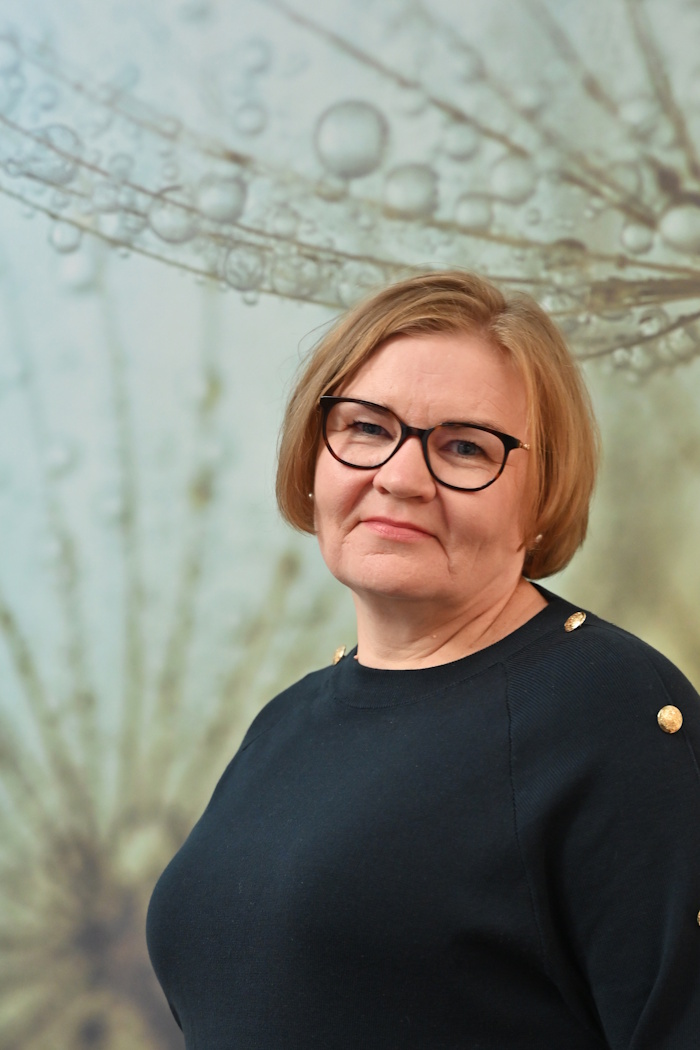
Marjo Koivulahti has promoted new land development throughout her career – “I don’t like wastefulness”
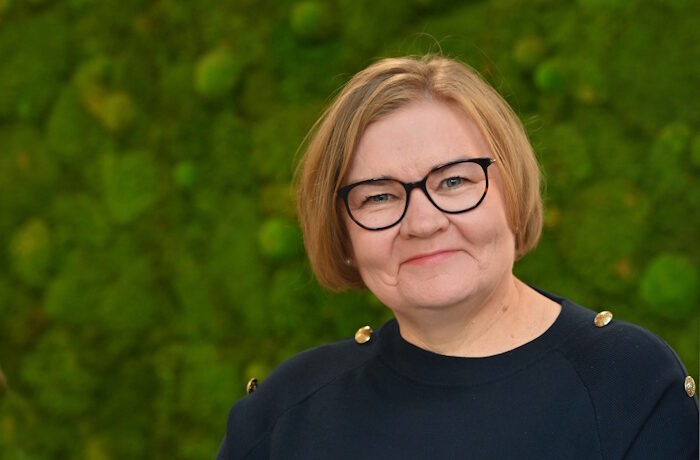



(For subscribers.) The UUMA program, which promotes new country development, has been in Finland for 20 years. Throughout that time, UUMA work has been a central part of Marjo Koivulahti's duties.
Koivulahti leads the 13-person Ramboll Environmental Geotechnology Unit in Luopioinen. Ramboll acts as the coordinator of the UUMA work. The program work on Uusiomaaraa construction is a significant part of Koivulahti's job description, along with other Ramboll projects, expert tasks and administrative work.
"I like the versatility of the work and the fact that I have been able to participate in moving the industry forward. My way of thinking is that I don't like waste. That's why combining the circular economy with infrastructure and civil engineering interests me."
From soft ground to solid ground
When Koivulahti began his career in the mid-1990s as a summer worker in the laboratory of the then Viatek and wrote his master's thesis on the use of fibrous clay, the circular economy was not yet an established term. At that time, the use of ash and concrete aggregate from power plants was already being developed, for example.
Now, 30 years later, the focus has shifted to utilizing new side streams and recycled materials.
For example, foam glass quickly established its position in infrastructure construction. MARA Regulation has improved the possibilities of utilizing waste in earthworks. According to Koivulahti, the UUMA work contributed to the entry into force of the latest decree by providing a wealth of research information on suitable materials.
Great strides have also been made in deep stabilization.
"Soft soil no longer necessarily needs to be dug out and replaced with crushed stone, but can be modified with deep stabilization so that it can remain in place. Fly ash, gypsum and slag have been used as secondary stabilization materials. This avoids emissions from the production of binders and the transportation of soil masses and saves natural resources."
UUMA program work However, Koivulahti considers the program's greatest achievement to be that it has succeeded in building cooperation and a common language.
"The UUMA work is based on the exchange of information. Cooperation can deepen when the client and the producer of the materials understand each other and when the authority is involved in the same discussions."
The classification of materials as waste continues to complicate their recovery
However, certain issues still await resolution.
Effective mass management and coordination can reduce landfill transport and associated emissions. However, the different stages of land use planning should better support the implementation of redevelopment and the circular economy.
Utilizing mine tailings is also difficult due to the long distances involved.
The waste label of materials still makes recovery difficult. The MASA regulation that would accelerate the recovery of soil waste has still not been obtained.
The lack of regulation has increased uncertainty, especially for producers of recycled binders used in stabilization.
The No More Waste (EEJ) procedures for determining the waste status are laborious and do not necessarily help to dispel suspicions. The productization procedure (UTU) under the Waste Act on Recycled Materials, which will come into force next year, is expected to improve the situation.
The next 20 years of UUMA work
The UUMA program is currently applying for funding for its sixth program period.
"There is already a lot of information. The next thing to do is to improve its discoverability."
However, clearer additional information would be needed, for example on how much aggregates and recycled materials are used in Finland, and on how large amounts of soil are utilized. There are currently no precise statistics on this.
“What is not measured cannot be controlled,” Koivulahti summarizes.
Koivulahti considers the continuity brought by the UUMA program important, but also the opportunity to stop between program periods and reassess the priorities of the activities.
Koivulahti's vision is that in 20 years, the protection of vegetation, animal species and biodiversity in general will have become as established a practice as groundwater protection is today. Circular economy criteria have become part of procurement, and clients will thus be able to achieve their own climate and nature goals.
Long-term developer
Who: Marjo Koivulahti, Unit Manager, Ramboll Finland.
Where: I am from Luopioinen.
How I live: In an apartment building in Kangasala. The family includes two adult daughters.
Education: Master of Science (Engineering) in Civil Engineering, Tampere University of Technology.
My hobbies: Cottage living, traveling and exercising.
I recommend: To look at things broadly and develop them long-term.
Text: Elina Saarinen, Uusiouutiset
Photo: Tero Pajukallio. “It is significant that Ramboll has seen the importance of the UUMA program,” Marjo Koivulahti thanks her employer. Ramboll coordinates the UUMA work. In the fifth season of the program, the Finnish Transport Infrastructure Agency and the Ministry of the Environment, as well as the consulting companies AFRY and Sitowise, have played important roles. Motiva has handled the program’s communications.
More on the topic



Uusiouutiset newsletter