
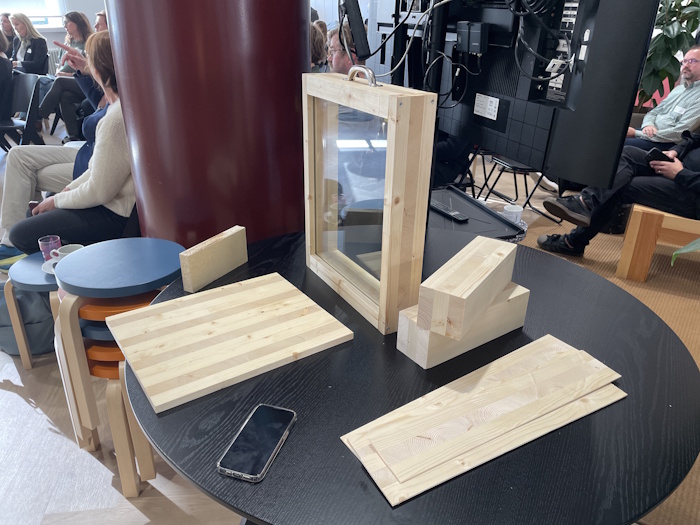
AisBois has been selected as the winner of the circular economy innovation challenge for wood products. The company, rooted in Lapland, creates timeless objects from waste materials from the wood products industry. The winner was announced at a ceremony organized by Puuinfo Oy…
Wood is a cheaper building material than concrete when emissions are also priced
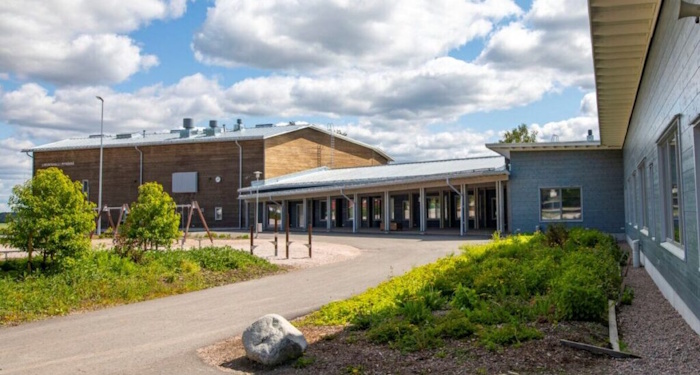



Aalto University researchers compared the costs of a school and sports hall built from logs with a concrete alternative. When a monetary value was given to the emissions, wood proved to be clearly more cost-effective.
Research shows that when the emissions and other environmental impacts caused by building materials are converted into euros, a wooden school is significantly cheaper for society than a concrete alternative.
Professor Seppo Junnilan According to the Finnish Construction Institute, wood is a much more environmentally friendly building material than concrete. However, the wider adoption of wood has been slowed down by higher initial costs.
“Our research shows that it is possible to assign an economic value to the environmental impacts of building materials – and that it will greatly change the perception of the true costs of construction projects,” Junnila says.
Research group revealed the actual costs of the log school and sports hall built in Myrskylä in 2021 and calculated what the reinforced concrete alternatives would have cost.
Emissions cause hidden costs
Researchers also analyze the environmental impacts caused by, for example, the production of raw materials, the manufacture of materials, transportation, and construction.
The calculations took into account that wood materials bind carbon and act as temporary carbon sinks in the early stages of a building's life cycle.
Environmental impacts were converted into euros using internationally accepted valuation factors.
The Myrskylä school and sports hall would have been 4,4 percent cheaper if they had been made of concrete instead of wood. However, the initial emissions would have been about 40 percent higher with reinforced concrete structures.
"So, the total cost of the concrete structure, calculated using average prices, ultimately turned out to be about 30 percent higher than the wooden structure solution," says the doctoral researcher. Oana Iliescu.
The use of low-carbon materials could be accelerated through regulation
According to researchers, regulation of the real estate market largely focuses on improving the energy efficiency of buildings, and the environmental impacts of building materials receive too little attention.
However, society would have the opportunity to steer construction in a more sustainable direction, also in terms of materials.
“The environmental impacts of building materials could be included in public funding criteria, for example,” Iliescu suggests.
"If public procurements made visible the costs that society now has to pay due to environmental impacts, for example, using wood products as a building material would appear to be a much more attractive option."
Text: Päivi Ikonen, Kemiamedia.fi
Photo: Aalto University. The school and sports hall completed in Myrskylä, Uusimaa, in 2021 were built of wood.
More on the topic














Uusiouutiset newsletter