

The ninth voluntary green deal agreement related to environmental goals has been signed in Finland. The Ministry of the Environment, the Finnish Waterworks Association and the Association of Local and Regional Authorities have signed an agreement on the treatment of municipal wastewater. The agreement…
Powerful mosses purify mining and forestry waters from metals
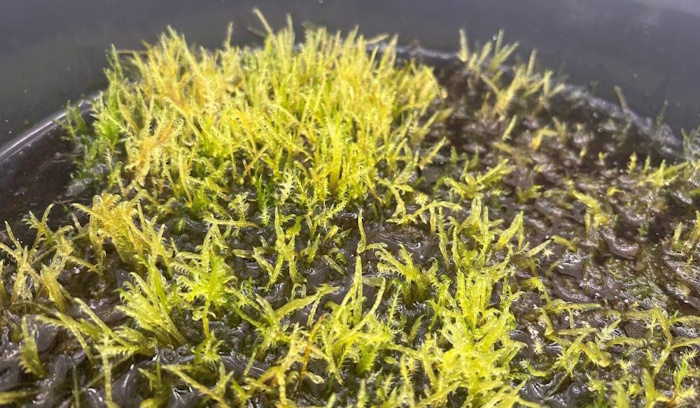



Researchers at the University of Oulu have discovered powerful mosses that, together with their microbial partners, can remove heavy metals from water, among other things.
Promising Neva sickle moss growths (Warnstorfia fluitans) found, among other things, along the floodplain of the Pyhäsalmi mine and in other old northern mines.
The researchers were surprised that the plant seemed to thrive in metal-rich, highly acidic water, where the low pH increases the solubility of metals. Few plants survive in such waters.
Researchers found that mosses are good water purifiers.
Symbiont microbes as partners
The accumulation of metals in waterways is being accelerated in northern regions by climate change. Metals are being leached from the soil as a result of forest drainage. After active mining operations end, old quarries and ponds remain, the water of which needs to be cleaned.
Many cleaning methods work poorly in cold conditions, so the University of Oulu is developing biological methods especially suitable for the north.
The secret to the cleaning power of sphagnum mosses was revealed to be their cooperation with microbes, or symbionts, that live in symbiosis with the mosses.
"The ever-increasing body of research data reinforces the understanding of the strong role of microbes in the success of plants in a wide variety of conditions," says the professor. Anna-Maria Pirttilä.
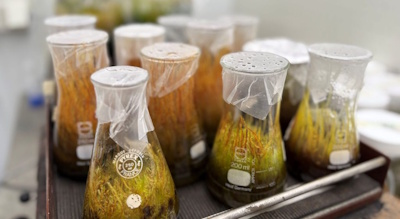
Moss acts like a sponge
Oulu researchers have found that mosses grown in areas rich in metals have more symbionts that improve metal tolerance.
They have managed to grow Phialocephala bamuru – and Hyaloscypha hepaticola –microbes also in the laboratory.
The results suggest that these symbionts contribute to the moss's ability to precipitate soluble metals inside its cells.
"Moss is like a sponge that binds and molds metal into a more tolerable part of its own structure," describes the postdoctoral researcher. Kaisa Lehosmaa.
Microbes modify the conditions in the moss cell so that the harmful soluble metal can be converted into a more solid and more manageable form.
Targeting commercial products
Researchers have tested the cleaning power of mosses and microbes for iron, cadmium, copper, zinc, nickel and arsenic.
In their previous tests, they have shown that mosses collect nutrients from water in a three-week reaction time and also estimate that it takes several weeks to collect metals.
The effectiveness will be further investigated in further research. The ability of mosses to remove metals is planned to be tested in the Kalimenjoki River catchment area, where iron deposits have browned.
Pirttilä's group also aims to commercially exploit the research results.
“We develop commercial strains of microbes and products for various fields,” the professor says.
In a recent study with international partners, in the study Pyhäsalmi mine and Outokumpu were also involved.
Text: Päivi Ikonen, Kemiamedia.fi
Photo: Kaisa Lehosmaa. Researchers were surprised to discover that the Neva sickle moss thrived in metal-rich and highly acidic water.
More on the topic













Uusiouutiset newsletter