
Recycling ash in agriculture and forestry is a way to promote low-carbon development. At the same time, cost savings can be generated. Since the beginning of September, it has been possible to apply for…
Ashes as circular fertilizers: A new method from the University of Jyväskylä promotes the utilization of ash in forest fertilization
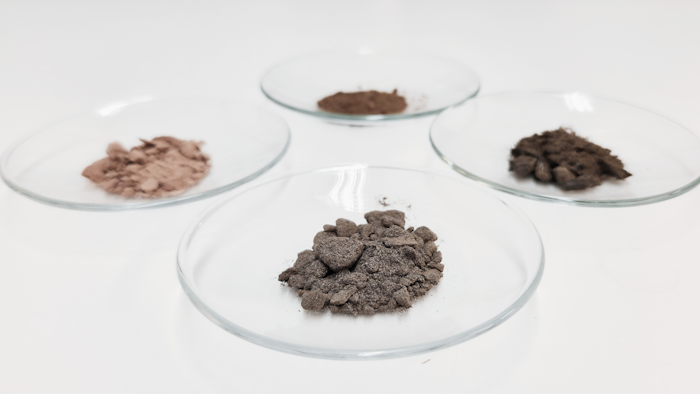



The method developed by the University of Jyväskylä expands the range of ashes suitable for forest fertilization.
Thanks to the method, even ashes that were previously unsuitable for fertilization due to their high content of harmful substances are now suitable for use as forest fertilizer.
"In the green method we developed, ash is treated with an organic acid, which enables arsenic and cadmium to be removed from the ash without significantly reducing the nutrient content of the ash in terms of potassium and phosphorus, which are important for forests," says the postdoctoral researcher. Emilia Virtanen From the University of Jyväskylä.
Thanks to the processing, the ash meets legal requirements.
The analyzed ashes include fly and bottom ash.
The University of Jyväskylä is involved In the Heleä project (Solutions for a green transition by increasing the utilization of ash and ash fertilization). In addition to the University of Jyväskylä, the Finnish Forest Centre is also involved in the project coordinated by Jyväskylä University of Applied Sciences.
The Heleä project recently published its partial report.
"The University of Jyväskylä is responsible for researching the quality of the ash in the project. We analyze the nutrients and valuable metals contained in the ash using methods developed and optimized at the university," says Virtanen.
The University of Jyväskylä analyzed a total of 26 ash samples from 20 plants in Central Finland. The samples contained both bottom and fly ash.
Wood ash contains nutrients but also potentially harmful substances
"Our results showed that wood ash contains, on average, more nutrients, such as phosphorus and potassium, and fewer harmful substances such as arsenic, cadmium, nickel, copper and chromium," explains Virtanen.
Although most of the analyzed ashes are suitable as forest fertilizer, the use of wood and peat ashes may be limited by their high concentrations of harmful substances, especially arsenic and cadmium.
The concentrations of harmful substances in peat ash were lower for lead, zinc and cadmium.
"However, the results must take into account the combustion conditions. Boiler materials, for example, can also affect the metal content of the resulting ash. When burning industrial side streams, any nails or other metal parts can also affect the quality of the ash," Virtanen reminds.
The Heleä project is co-financed by the European Union and is part of the Just Transition (JTF) funding programme. The project is also financed by Alva Oy, Finsilva Oy, Keuruun Energia Oy, Loimua Oy, Puulaakson Energia Oy, the city of Saarijärvi, Yara Suomi, and MHY Karstula-Kyyjärvi and MHY Keski-Suomi.
Text: Uusiuutisten editorial team
Photo: University of Jyväskylä. The Department of Chemistry at the University of Jyväskylä is developing a method for removing harmful substances such as arsenic and cadmium that are commonly found in ash.
More on the topic





Uusiouutiset newsletter