
(For subscribers.) How are the costs of collecting, recycling and waste management of batteries distributed fairly so that the market functions fairly? How can we…
Producer Responsibility Afternoon Predicted Upheavals: The Focus of Producer Responsibility Expands from Waste Management to Managing the Entire Life Cycle of Products
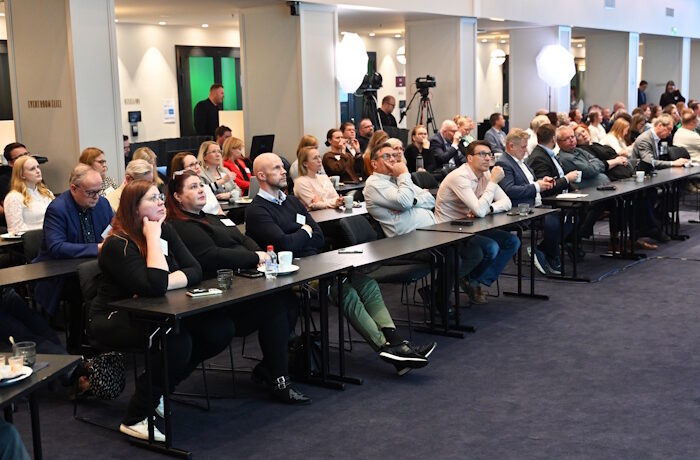



The role of producer responsibility is changing from being a bearer of cost responsibility for waste management to a comprehensive circular economy management system. Experts see that in the coming years, the grip of public power will strengthen as EU regulations become more uniform. The change was anticipated at the Producer Responsibility Evening, which brought together 150 participants in Helsinki on 5 November 2026.
"Producer responsibility has been seen as a tool related to waste management, but I believe that the basic function of producer responsibility will change radically in the coming years. This would seem to become a comprehensive circular economy steering system, which includes several regulatory measures from economic steering to standard steering," the Legislative Advisor to the Ministry of the Environment Jussi Kauppila anticipate.
According to Kauppila, the EU is increasingly favoring regulations that directly bind member states rather than directives. For example, the directive on waste electrical and electronic equipment will likely be transformed into a regulation, according to his assessment.
"EU regulation would seem to substantially narrow national room for manoeuvre. The Commission's circular economy regulation also promises more harmonisation. I suspect that the public role of producer organisations will become stronger."
Producer responsibility has not yet revolutionized product design
Professor of European and International Circular Economy Law and Economic Law at the University of Eastern Finland Harry Kalimo reminded that the basic idea of producer responsibility was refined in the early 1990s from the "polluter pays" idea: The aim was to transfer the costs of waste management of products from the public sector to the responsibility of producers.
According to Kalimo, this goal has been achieved. However, the other original goal, encouraging manufacturers to design products more environmentally sustainable, has made modest progress.
One way to guide product design is ecomodulation, where the producer responsibility fee is reduced or increased based on the environmental characteristics of the product.
According to Kalimo, however, the effectiveness of ecomodulation will be limited if the fees are based only on recycling and waste management costs. They do not provide information, for example, on the product's lifespan or the environmental impact of manufacturing.
Therefore, the differentiation of fees should be based more strongly on life cycle assessment than is currently the case. This would require public guidance, as producers may not have a common interest in significantly increasing fees for environmentally harmful products. Large differences in fees could affect the competitive position of companies.
More control over public authorities
Kalimo presented at the Producer Responsibility Evening that the steering power of producer responsibility will partially be transferred from the private sector back to the public sector.
Kalimo justified the change, which he called deprivatization, with four factors: There is a desire to improve the environmental sustainability of products. There is pressure to harmonize the rules of the EU internal market. There is also a desire to increase the transparency of information. In addition, competitive factors are driving deprivatization.
According to Kalimo, the current producer responsibility system is too fragmented. EU member states implement producer responsibility in different ways, even though companies would benefit from uniform internal market rules.
A stronger role for the public authorities would also be necessary because producer organisations do not have sufficient incentives to consider the environmental impacts of products throughout their entire life cycle. Their operations are primarily based on cost-efficiency, not on maximising environmental benefits.
However, Kalimo does not propose transferring producer responsibility entirely to the public sector. Private sector incentives and market mechanisms must be maintained where they work effectively.
From waste policy to the overall picture of the circular economy
Kalimo also challenged the current emphasis on the circular economy. The circular economy has been strongly guided by waste policy, even though the environmental impacts of products can be most effectively influenced before the waste management phase.
The life cycle of products can be extended through, for example, sustainable design, maintenance and repair. Increasing product utilization and changing consumer behavior are also key ways.
However, producer responsibility is not necessarily the best tool for achieving all environmental goals.
In addition, the steering of the circular economy must reconcile environmental goals, resource efficiency, business competitiveness and the EU's strategic autonomy. According to Kalimo, this also requires societal value choices, in which the public sector plays a central role.
Producers' Associations Advisory Board TYNKin The Producer Responsibility Evening organized by was held for the tenth time. The themes of the anniversary event, held at Scandic Grand Central Helsinki, were extending the life cycle of products, new recycling technologies and the regulation of producer responsibility.
Supplier Peter Nyman The event was attended by representatives of producer organizations, authorities, companies, and other circular economy experts.
Text: Elina Saarinen, Uusiouutiset
Photo: Tero Pajukallio. The Producer Responsibility Evening was held for the tenth time this year. The interesting program brought together approximately 150 participants at the Scandic Grand Central Helsinki on November 5, 2026.
More on the topic






Uusiouutiset newsletter